
SSF Seaweed Science:
In-Vitro Evidence & Strain Registry
All quantitative claims on this page are preliminary in-vitro results. In-vivo validation is scheduled for Q4 2026. Data is shared to enable scientific review and partnership due diligence — not as final proof of commercial efficacy.
~50% CH₄ Inhibition:
Gas Production Assay Results
All values are in-vitro only. PRELIMINARY. Not validated in live animals.
Preliminary in-vitro result — batch rumen gas production assay. In-vivo results not yet available.
Assay Conditions & Methodology
Gas production assay — batch rumen fermentation in vitro
| Parameter | Value / Description |
|---|---|
| Assay type | Batch rumen fermentation gas production assay |
| Incubation period | 24 hours |
| Temperature | 39°C (rumen physiological temperature) |
| Inoculum | Buffered rumen fluid from rumen-cannulated Holstein cows |
| Substrate | SSF-processed tropical red seaweed blend (proprietary formulation) |
| Dose tested | Proprietary (commercial dosage to be confirmed post in-vivo validation) |
| Control | Basal substrate without seaweed addition |
| Gas measurement | Syringe gas production (total gas); CH₄ measured by gas chromatography |
| Replicates | 3 replicate syringes per treatment; 2 experimental runs |
| Primary outcome | ~50% reduction in CH₄ production (% of total gas vs. control) |
| Secondary outcomes | Total gas volume, volatile fatty acid (VFA) profile, dry matter disappearance (DMD) |
| Conducting institution | Aenon R&D — external verification pending |
| Data status | Internal preliminary results. Peer review not completed. |
Key Preliminary Findings
Reported alongside supporting measurements — not standalone claims
| Measurement | Direction vs. Control | Status |
|---|---|---|
| CH₄ production (% total gas) | ↓ ~50% | Preliminary |
| Total gas volume | Moderate reduction (fermentation continues) | Preliminary |
| Propionate ratio in VFA | ↑ Trend (propionate pathway — H₂ sink) | Monitoring |
| Dry matter disappearance | Maintained (no negative digestibility signal) | Preliminary |
| pH after 24h incubation | Within normal rumen range (6.4–6.8) | Preliminary |
⚠ Propionate A/P ratio trend is YELLOW evidence. Numerical claim not asserted until in-vivo data is available.
Proposed Dual Inhibition Mechanism
Note: Proposed mechanisms are based on preliminary in-vitro observations and current literature. Causal confirmation requires in-vivo mechanistic studies (planned Q4 2026).
Research Milestones
Fermentation Strains:
Registration & Functional Profile
Both strains are selected for thermotolerance at 45°C — a critical requirement imposed by the gel-forming property of carrageenan in the primary red seaweed substrate, which prevents liquid-phase fermentation and necessitates solid-state processing.
Thermotolerance: Active at 45°C — essential for SSF at carrageenan gel-forming temperature
Proposed function: Primary lactic acid fermentation; bioactive compound modification via enzymatic activity; partial acidification of substrate
SSF role: Initiates fermentation cascade; produces acetate and propanediol from carbohydrates; modifies substrate matrix
Safety class: Species class has a long history of safe use in feed fermentation (silage); generally recognised as safe in fermented feed contexts
Status: Formally characterised — strain identity will be disclosed upon patent grant
Institutional deposit: Formally deposited at a national strain repository as a patent strain deposit — deposit verifiable; strain identity not publicly disclosed
Thermotolerance: Active at 45°C; adapted for solid-state conditions
Proposed function: Secondary fermentation; exopolysaccharide (EPS) production from seaweed polysaccharides; potential prebiotic activity in rumen
SSF role: Synergistic with primary strain; contributes to substrate matrix modification and bioactive compound profile shaping
Status: Formally registered — institutional deposit confirms existence; strain identity will be publicly disclosed upon patent grant
KIPO Patent-Pending:
22 Claims Overview
The KIPO (Korean Intellectual Property Office) patent application covers the SSF process, strain combination, and composition. Full patent number will be disclosed upon grant. Claims listed below are structural summaries — exact legal language is in the filed application.
In-Vivo Trial:
Planned Q4 2026
In-vivo data is YELLOW evidence — it will be published with full methodology when available. No in-vivo results are available as of the date of this page.
Why This Seaweed Blend?
Substrate Selection Rationale
The 70:30 tropical red seaweed blend ratio is determined by carrageenan content, gel-forming behaviour, bioactive compound profile, and supply chain availability from Vietnam. This is not arbitrary — the ratio is a core patent claim.
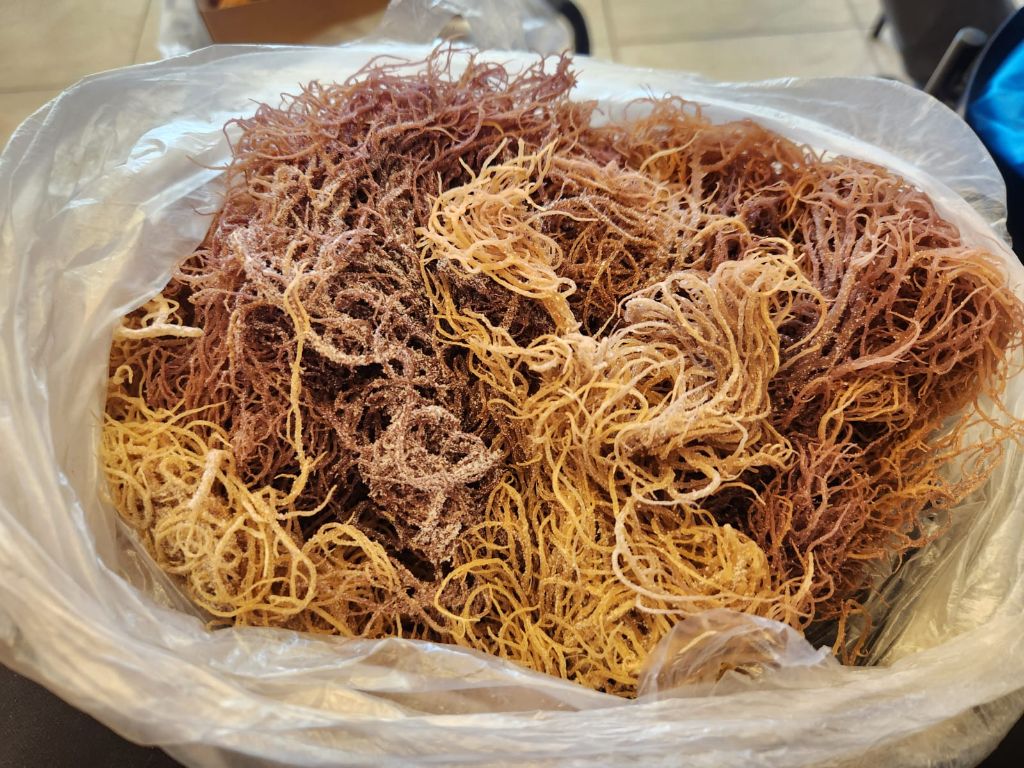
- ι-carrageenan gels at room temperature → liquid fermentation impossible
- Gel formation is why SSF is not merely preferred — it is the only viable process
- High bioactive sulphated polysaccharide fraction
- Commercial scale availability: Vietnam (Ninh Thuận, Khánh Hòa)
- Established supply chain via AENON Vietnam agricultural network
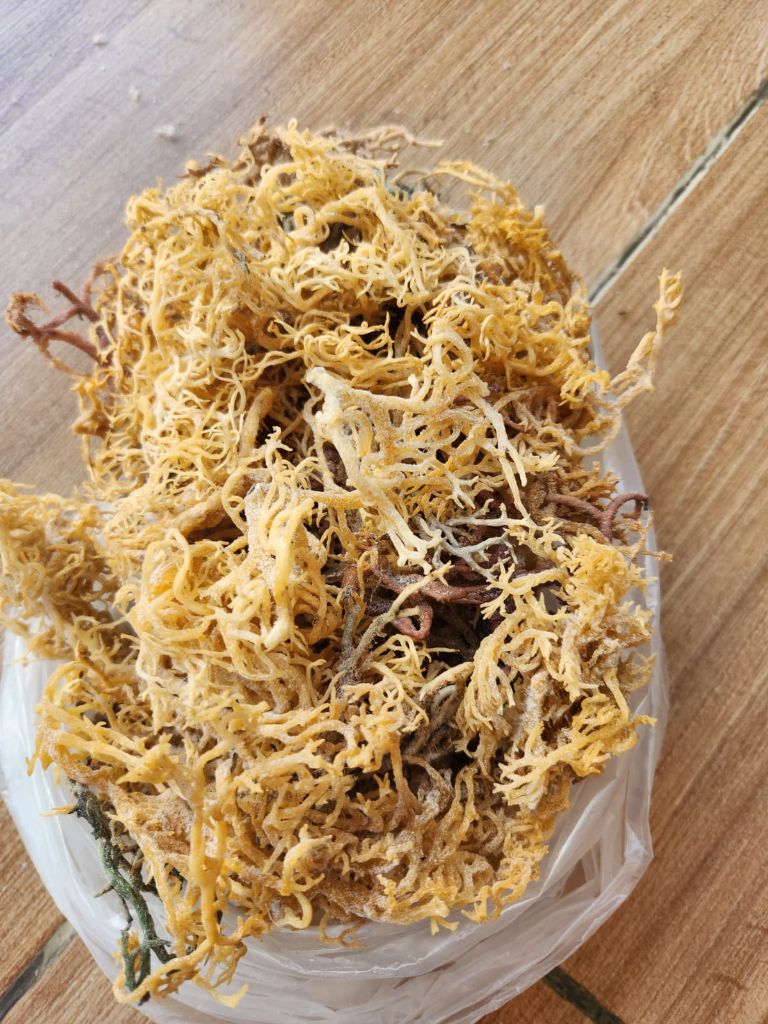
- κ-carrageenan — complementary gel-forming profile to ι-carrageenan
- Contributes distinct sulphated polysaccharide fractions to final product
- 30% ratio modulates total substrate viscosity and SSF matrix structure
- Also commercially cultivated in Vietnam — same supply chain
- Both species: bromoform-free (no halogenated compound concerns)
The specific 70:30 ratio and SSF process combination is the subject of patent Claim 2. Variations from this ratio require separate validation.
Scientific Due Diligence & Partnership
Researchers, investors, and institutional partners may request our full internal technical dossier for due diligence review.